
What is lyophilization?
Lyophilization is the process of removing water from a product to the point where it is no longer biologically or chemically active. Lyophilization of an assay prevents degradation of its components such as enzymes, antibodies, proteins, DNA or oligonucleotides, allowing them to be safely transported and stored at room temperature with no loss in performance.
Three basic stages of lyophilization
- Freezing – The liquid product must first be uniformly frozen to a temperature below its eutectic point (Teu) or collapse temperature (Tc).
- Primary drying – A vacuum is applied to the frozen product once it is below the collapse temperature. Most of the water as vapor is removed from the ice crystals at this stage from a product through the process of sublimation.
- Secondary drying – A small amount of water usually remains after primary drying as it may be chemically bound. Whilst still under vacuum the product is heated to a temperature above 0°C and the residual water evaporates by desorption.
Freezing
Freezing is the first stage which is often overlooked during development but is key to successful lyophilization. As the morphology of the resulting ice crystals determines both mass and heat transfer rates through the dry layer, the freezing parameters have a strong influence on the primary and secondary drying steps. With uncontrolled freezing, ice nucleation occurs randomly, leading to variable drying rates. Ice nucleation can be controlled by cooling a formulation to a temperature below equilibrium freezing point but above the temperature at which spontaneous nucleation occurs. This process results in larger, more uniform ice crystals, increasing batch to batch homogeneity and reducing variability in drying behavior. Protein aggregation occurs on the surface of ice, decreasing the available surface area with controlled nucleation, also creating a positive effect on activity recovery.
Partially crystalline formulations characteristically display incomplete crystallization during freezing, lowering the glass transition (Tg’) temperature and leading to longer drying times. In these instances, an annealing or thermal cycling step may be beneficial. This involves warming the formulation to above its Tg’ (but below its Teu), then re-cooling it to increase crystallization efficiency.
Primary drying
The drying process is initiated once the formulation is fully frozen. First, the frozen product is subjected to a strong vacuum, with the exact pressure depending on the primary drying temperature. This results in a difference between the ice vapour pressure and the chamber pressure, resulting in sublimation. The formulation is then heated to speed up sublimation and generally needs to occur above -40ºC for lyophilization to be efficient. For formulations with low protein concentrations, the primary drying temperature is usually kept below the glass transition temperature (Tg’) as, at this temperature, the assay mix has a completely solid structure with no movement or flex, allowing subsequent removal of water without damaging the assay components. However, formulations with high protein concentrations can sometimes be dried at temperatures above the Tg’ but below the collapse temperature Tc to accelerate drying.
Insufficient primary drying will cause the product structure to collapse, leading to poor rehydration characteristics, loss of assay performance and reduced long-term stability. As mentioned above, stabilizers, bulking agents and critical temperature modifiers can be used to improve lyophilization parameters, create a more cost and time-effective process and improve post-lyophilization protein recovery.
Secondary drying
Following primary drying, up to eight percent of the initial moisture content can still be present in the product, usually chemically bound to the assay components. The aim of secondary drying is therefore to remove this residual water, ideally to less than three percent. However, the optimal value will vary according to the formulation, product stability and long-term storage conditions.
To achieve secondary drying, still under vacuum, the product is warmed to 20-40ºC and held for several hours. For amorphous formulations, the temperature ramp rate to the secondary drying temperature needs to be approximately 0.1-0.3ºC/min to avoid exceeding the glass transition of the lyophilized cake, which would result in shrinkage. This highlights the importance of understanding the physical characteristics of your formulation prior to protocol development.
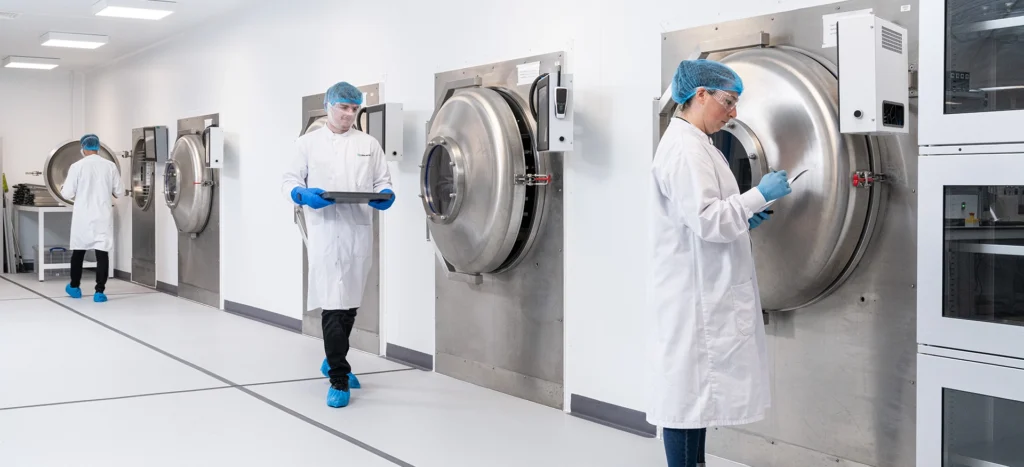
‘It is important that your freeze-dryer is capable of delivering the required lyophilization parameters for your formulations and it is difficult to know what they are until they are established. Freeze-dryers are expensive and require significant capital investment’
Lyophilization equipment and facilities
Freeze dryers are the equipment used to perform the lyophilization process, modern freeze dryer systems comprise of the following;
- A temperature controlled drying chamber typically capable of controlling product temperature between -50°C and +50°C. The drying chamber usually contains a number of shelves that are temperature controlled with internal circulating coolant. Heat is directly transferred from the shelves to the product primarily by thermal conduction and a small amount by radiation. The shelves can be compressed to seal stoppered vials in-situ and the drying chamber vacuum can be equilibrated by back filling with inert gas instead of air.
- A supercold condensing trap that runs at temperatures as low as -80°C to capture water vapour as ice from a product.
- A vacuum pump capable of achieving and maintaining very low pressures in the drying chamber.
- The ability to back-fill the drying chamber with inert gases such as Nitrogen or Argon. This displaces air making the lyophilized product less reactive and is often used with stoppered glass vials which are filled with inert gas and stoppered under a partial vacuum.
- Mechanical stoppering system which collapses the shelves resulting in the in-situ closure of rubber seals in the product vessels.
Freeze-dryers range significantly in sizes, capability and cost. An R&D benchtop system typically has less than 1M2 of shelf space and a condensing capacity of up to 5kg of ice. A mid-sized pilot manufacture system may have up to 5M2 of shelf space and a condensing capacity of 50kg of ice. A commercial freeze-dyer is likely to have greater than 20M2 of shelf space and condensing capacity of greater than 100kg of ice.
Lyophilized product will absorb water rapidly under normal environmental conditions and lyophilized beads can be affected within just a few minutes if not protected from ambient conditions. It is therefore important to control both temperature and relative humidity (%RH) in the processing area’s from when the product leaves the freeze-dryer to the point it is packaged. Controlling humidity in large spaces is challenging particularly during humid summer months. Significant investment in plant equipment is required to operate under less than 10% RH with operators present. Additional air handling systems for clean-room conditions may also be required to protect the product from contamination. There are a number of low-cost isolated units such as dry boxes available for R&D work but these have limit handling capabilities.
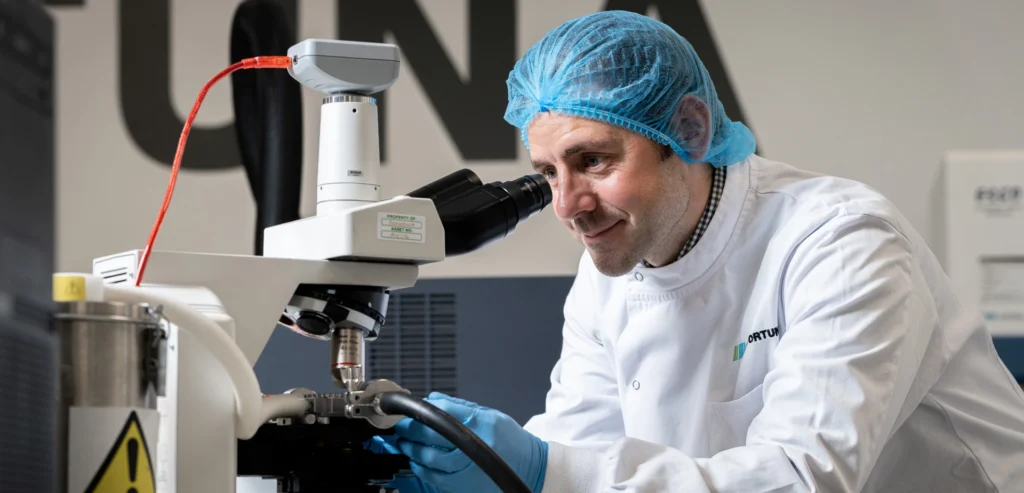
It is vital to understand the thermodynamic properties of your formulation as some components make lyophilization very challenging and inefficient or even impossible
Understanding your formulation
There is no such thing as a ‘one-size-fits-all’ freeze-drying protocol, and the success of the lyophilization process in both physical and commercial terms relies on careful formulation and analysis of your product. It is therefore vital to understand the thermodynamic properties of your formulation before designing a freeze-drying protocol, to both preserve assay activity and maximize its stability post-lyophilization.
Typically, a frozen protein formulation consists of two phases; approximately 80 per cent is ice crystals, and the remaining 20 per cent is an amorphous or a partially crystalline phase that contains excipients and proteins. It is the latter of these phases that forms the freeze-dried cake or pellet structure, containing pores where the ice crystals have been removed. The contents of this amorphous or crystalline phase also determines the critical temperatures of a formulation, which must be determined in order to design an optimal and formulation-specific freeze-drying protocol. Various analytical techniques, including freeze-drying microscopy (FDM) and differential scanning calorimetry (DSC), should be used to determine the characteristics and critical temperatures of your formulation in order to design an optimal, efficient and cost-effective freeze-drying protocol.
Freeze-drying microscopy (FDM)
FDM is used to determine visible changes in a formulation. This technique subjects a sample of the formulation to the lyophilization process, which is observed using light microscopy. As with a full-scale lyophilization, the sample is frozen to a specified temperature under vacuum. The sublimation front is observed moving from the outside of the sample inwards, and the structure of the frozen material yet to be lyophilized observed. Once sublimation begins, the temperature is raised gradually to the point that the softened lyophilized material can no longer support its own structure, known as the collapse temperature (Tc).
Differential scanning calorimetry (mDSC)
mDSC is a thermos-analytical technique used to measure the amount of energy required to heat a sample compared with a reference. For completely amorphous formulations, mDSC is used to determine the glass transition temperature (Tg’), the temperature at which the formulation transitions from a brittle “glassy” state into a viscous “rubbery” state. For partially crystalline formulations, mDSC also determines the eutectic temperature (Teu); the temperature at which the super-lattice releases all of its components into a liquid mixture at once. mDSC can also be used to analyze dry, post-lyophilization samples, helping to determine the residual moisture content and establish recommended storage temperatures to maximize stability.
Achieving the right formulation
Optimization of the lyophilization formulation can be used to both preserve assay performance and ensure that the freeze-drying process is as effective as possible. There are a number of additives referred to as excipients which can be incorporated into a lyophilization mixture, which can be broadly divided into three categories: stabilizers, bulking agents and critical temperature modifiers.
It is important to note that these excipients can have concentration dependent, positive and negative impacts on assay performance and knowledge of excipient selection is key to timely development of optimal reagents.
Stabilizers
The freeze-drying process exposes the components of a diagnostic assay to extremes of temperature, pressure and moisture content. In many cases, this could potentially lead to the damage or denaturation of sensitive reagents, affecting assay performance. Stabilizers provide protection during freezing (cyroprotectants) or drying (lyoprotectants) and include a range of buffers, sugars (disaccharides/ polysaccharides), polymers, proteins and amino acids. Stabilizers are particularly important when freeze-drying biological components, such as enzymes or antibodies, but the choice and concentration of these protectants is critical, as these additives must not interfere or inhibit assay performance. Simple screening of potential stabilizers using the wet formulation (prior to freeze-drying) can determine whether assay sensitivity, performance or detection is likely to be affected. FDM and DSC are used to identify any resulting changes in the Tg’ or Tc, and to help determine the optimal concentration for the additive.
Bulking agents
Bulking agents are used to cosmetically enhance the appearance of the final product. They are generally inert, usually having no functional impact on the product itself, although some bulking agents (for example, sugars or polymers) can also have stabilizing properties and aid reconstitution of the assay components at the point of use.
Critical temperature modifiers
The temperatures used for the freezing and primary drying steps can have a huge impact on the speed and cost of lyophilization processes. For example, raising the freezing temperature by 5ºC can halve the primary drying time, by increasing the vapor transfer rate and accelerating the sublimation process. This leads to shorter cycle times and increased throughput, making the overall lyophilization process far more economical. There are a number of additives which can be used to raise the Tg’ to ensure cost-effective drying, including Dextran, Glycine, Mannitol and Polyvinylpyrrolidone (PVP).
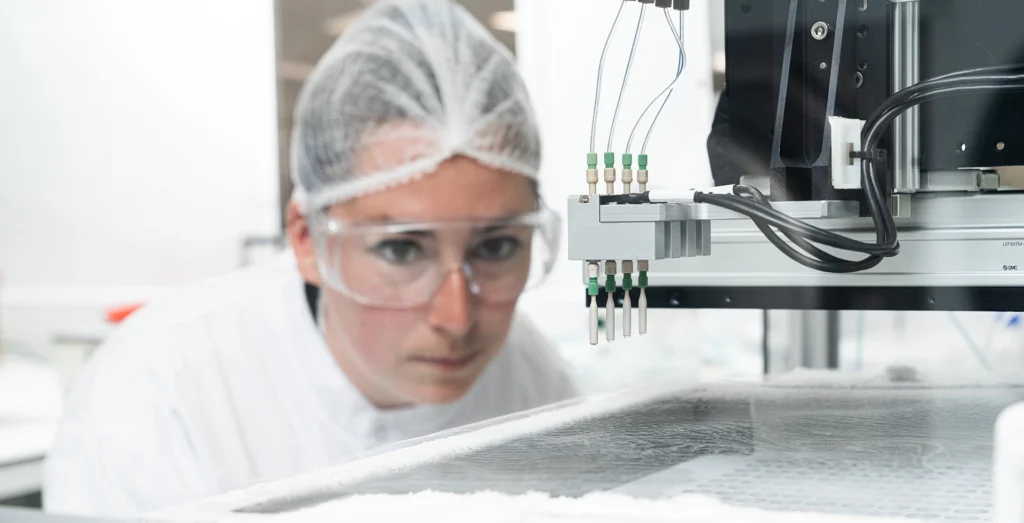
The performance requirements of the final assay, including the need for long-term stability and rapid reconstitution, must therefore be considered from the outset. There may also be additional challenges specific to the assay type
Additional design challenges
The large number of available lyophilization excipients makes a structured approach to formulation development essential. It is vital to understand the potential effects of individual additives on the behavior and performance of each diagnostic test and there are a number of other critical factors to consider when developing the formulation, including components such as glycerol and salt concentrations, the reaction volume and the vessel type. The optimal formulation will vary significantly depending on the assay and intended use, as well as the analyte being tested. For example, the stability requirements of an assay kit designed for occasional point-of-care use in outreach clinics will be very different from an assay intended for high volume testing in a hospital laboratory. The performance requirements of the final assay, including the need for long-term stability and rapid reconstitution, must therefore be considered from the outset. There may also be additional challenges specific to the assay type. For example, stabilizing agents commonly used for immunoassays may interfere with PCR reactions and, therefore, may not be suitable for many molecular diagnostic applications.
Incompatible formulation components
There are a number of components that may be present in a formulation that may not be compatible with lyophilization. Glycerol is often used to stabilize frozen stocks of enzymes that are used in molecular diagnostics, this is often present at concentrations upwards of 50%w/v. During lyophilization the glycerol concentration in a formulation increases as water is removed by sublimation during primary drying. This has a plasticizing (softening) effect on the lyophilized structure which then becomes glassy during secondary drying. The result is a product that may not be completely dry or will have poor structural appearance. This in turn will impact the products stability and reconstitution properties.
The carryover of residual glycerol from some reagents into the final formulation can vary in concentration significantly. Whilst some lyophilized formulations can tolerate relatively low concentrations of glycerol, typically a reagent is impacted on drying and appearance above 0.1%w/v and sometimes significantly lower depending on the formulation. Dimethyl Sulfoxide (DMSO) and other organic solvents are often used as a solvent for dyes and other components that are not soluble in water. The carryover of these can have a negative impact on lyophilization. High salt concentrations can cause a number of issues including significantly altering the pH of a formulation as it freezes which is particularly important if sensitive enzymes are present.
It is possible to source enzymes that are glycerol free from commercial enzyme suppliers, often referred to as ‘lyo-compatible’. Non compatible components can be removed from a formulation using buffer exchange techniques such as gel filtration, diafiltration and dialysis.
Download our latest Lyophilisation whitepaper
Learn how to find your formulation’s collapse temperature
Understand about the role of critical temperature modifiers
Identify the challenges of designing a freeze drying protocol

Lyophilization formats
It is important to consider the vessel of choice when developing a lyophilization process as these interact with the formulation in a number of different ways including thermal transfer, hydrophilic surface properties and leaching. Glass vials, plastic tubes, tube strips, plates, point-of-care (PoC) cartridges, bespoke sub-assemblies, porous membranes and lyo-beads are just some examples of lyophilized formats. Different materials vary with their thermal properties, conducting heat at different at different rates. Some plastics are good insulators which result in significantly different temperatures between the shelf and the product. This requires an off-set of shelf-temperature to ensure that the product is at the correct temperature and below the Tc. Metals tend to be more efficient at conducting heat depending on the thickness so the use of aluminum or thin steel trays enable good transfer of heat. Thermocouple probes are used to measure the product temperature, however by doing so they can also transfer heat to the product, causing it lyophilize at a different rate to adjacent product.
The containing vessel should ideally make direct contact with the freeze dryer shelf surface to achieve consistent heat transfer. Any changes to the vessel during development should be taken into consideration as changes to material type, thickness and overall dimensions can significantly impact the lyophilization process.
Lyophilized beads
Single doses of reagents in the form of small spherical or hemispherical beads have become increasingly popular particularly for point-of-care cartridge manufactures as these negate the requirement to lyophilize directly into cartridges or sub assembly components which take up space in the freeze-dryer. Lyophilized beads can be manufactured and stored at large scale making the lyophilization process more cost efficient. The beads can then be transferred into microfluidic cartridges using automated ‘Pick and Place’ instrumentation.
Lyophilized beads or Lyo beads are manufactured by either dropping a single bolus of liquid reagent into liquid Nitrogen which rapidly freezes them well below the collapse temperature or by dropping liquid reagent onto supercold hydrophobic surfaces.
The frozen beads are transferred onto metal trays and then lyophilized in the freeze-dryer. Post lyophilization, the beads are processed in a low humidity environment. Beads that have diameters outside of the specified upper and lower limits or fragments are removed by size exclusion sieves. They are then tested for appearance, strength, residual water content, reconstitution rates and functional testing.
Lyophilized beads must be formulated for consistency in morphology and robust strength so that they can be handled by robotic instruments. To achieve the robustness, lyophilized beads generally require a higher concentration of bulking agent than the equivalent formulation in a tube format. It is important that assay interference and reconstitution properties are not impacted as a result of increasing bulk concentration.
The beads can be dispensed directly into well-plates, tubes or cartridges using a range of semi-automated and fully automated solutions.
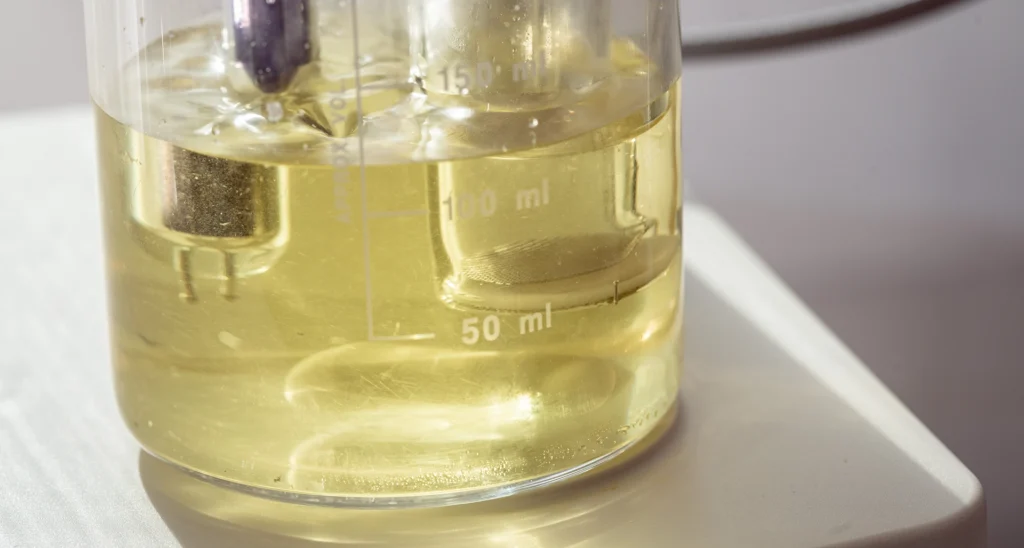
Having the ability to measure the physical and functional performance properties of a lyophilized product is paramount for reproducible and robust manufacture.
Post-lyophilization analysis
Characterization of the freeze-dried product is critical for understanding the impact of the lyophilization process, there are a number of tests that can be employed to determine if the lyophilization process is successful.
Karl-Fischer titration (KF) or Thermal Gravimetric Analysis (TGA) are effective quality control techniques to verify the reproducibility of the lyophilization protocol. Both can be used to rapidly and accurately quantify the residual water content in lyophilized samples, providing a rapid assessment of the suitability of the freeze-drying protocol. Although lower moisture content does not necessarily guarantee long term stability, it is a good indicator that a minimum level of moisture removal has been achieved.
High powered imaging of cake structure and surface morphology to measure the consistency of cake formation as well a strength test using a Texturometer to measure the resistive probe force to the point of cake fracture are both useful tests.
Dissolution testing to measure the reconstitution rate of a lyophilized formulation is important particularly for reagents used in fluidic formats such as point-of-care (PoC) cartridges where consistency is very important. Fluorescent or colored tracers can be added into the lyophilized formulation during development to understand the processes of mixing, reconstitution and flow of reagents.
Having a functional assay to test analytical performance is paramount to understanding the impact of the lyophilization process on the performance of the dried reagent when it has been reconstituted, with ideally no loss of performance.
Stability testing using accelerated aging models to predict shelf-life using equipment that can maintain temperatures and humidity above ambient conditions or real-time storage of product to determine actual shelf-life are also important assessments of the lyophilization process.

Working with a knowledgeable and experienced partner can help to significantly accelerate product development, ensure an effective and scalable freeze-drying process and reduce the overall cost and time of bringing an assay to the market
Experience is key
The complexities and numerous pitfalls associated with optimizing assay reagents for lyophilization can make the process seem more like a ‘black art’ than science. However, working with a knowledgeable and experienced partner can help to significantly accelerate formulation development, ensure a cost- effective freeze-drying process and reduce the overall cost of bringing an assay to the market. While there are a large number of companies with experience in freeze-drying formulations, lyophilization of many diagnostics reagents presents a number of unique challenges. Choosing an R&D partner that has a strong track record in the diagnostics sector – such as Biofortuna – and taking advantage of their expertise in the early stages of assay development, can maximize the chances of successful product development.
This know-how can also be important in identifying assay reagents or additives which are not suitable for lyophilization, enabling alternatives to be selected or allowing the design of assay protocols combining both lyophilised and non-lyophilized components, without wasting time and resources.
The potential challenges don’t simply stop with the completion of R&D, as lyophilization processes need to be translated into the successful scale-up and transfer of freeze-dried assays to manufacturing and can be simplified by selecting a lyophilization partner that has experience of working to ISO 13485 and FDA CFR21 part 820 compliant quality systems, as well as offering dispensing, assembly and packaging and testing services of diagnostic assay kits in a controlled environment, ready for shipment to your customers.
Conclusions
The primary aim of any freeze-drying protocol should be to maintain, or even enhance the stability of pre-lyophilized ‘wet’ assays. However, the complexity of the process makes it very difficult to develop a reliable, reproducible and cost-effective protocol without extensive knowledge and experience. While the lyophilization of diagnostic reagents is now relatively commonplace, with a wealth of literature and knowhow available to support product development, the growing popularity of diagnostics in a clinical environment closer to the patient has thrown up new challenges for assay kit manufacturers.
Working with a knowledgeable lyophilization partner that understands the demands of both molecular testing workflows and manufacturing for regulated environments, such as Biofortuna, can help to ensure cost-effective lyophilization of assays without affecting performance. Whether you’re looking to simplify testing workflows, improve assay stability or reduce transport and storage costs, freeze-drying can simplify the end-user experience of an IVD product, enhancing your reputation in a highly competitive market.
About Biofortuna
Biofortuna is an international IVD contract development and manufacturing business. We provide assay development and manufacturing services, with a wealth of expertise in immunoassay and molecular diagnostic assay stabilization. Our FDA registered and ISO 13485 certified facilities provide small scale pilot batch manufacture up to full commercial production of finished diagnostic kits.
TALK TO A LYOPHILISATION EXPERT
Great ideas start with a conversation. To discuss how we can help you lyophilise your assay, fill in the form below

Comments are closed.