Transferring a lyophilised assay from development to large-scale manufacturing is never a simple matter of just “scaling up”. The lyophilisation process introduces challenges surrounding equipment, formulations, stability, validations and quality control. Each of these must be carefully considered to ensure consistency, reliability and compliance.
Consideration 1: Freeze Dryer Capabilities
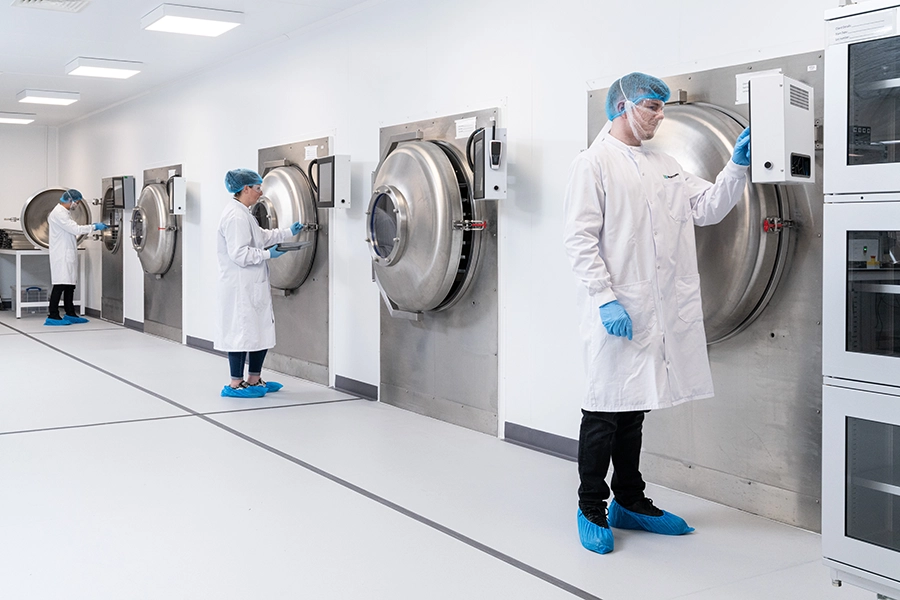 One of the most notable hurdles in assay transfer is equipment. A freeze dryer that handles pilot batches of hundreds of samples will not necessarily yield the same results as one designed to run tens or hundreds of thousands. Variations in shelf space, along with condensing efficiency and the insulating properties of the materials, can affect heat and mass transfer, altering the final product’s characteristics.
Furthermore, when transferring processes, it is essential to translate the development data into the new manufacturing environment. We conduct development work to confirm the optimal freeze-drying conditions, whether that means validating the established process or identifying ideal conditions from the outset.
We consider the scalability of our process for both development and manufacturing and have the option to utilise the same freeze dryer throughout the whole process. By designing the lyophilisation protocols with manufacture in mind, we obviate the need for additional validation down the line, streamlining entire process and saving significant time and resources.
To underpin this, we carry out a number of analytical procedures such as FDM and DSC identifying the critical formulation characteristics such as collapse temperature and glass transition temperatures. However, it also provides a quality checkpoint throughout development and transfer. This enables us to confirm that the assay is what it should be and has retained its intended characteristics.
Consideration 2: Formulation and Stability
Formulation is another critical consideration when moving into large scale lyophilisation. Preparing a batch of samples at the microlitre scale is very different to formulating at the litre-scale. Without the careful optimisation of the formulation and mixing protocol, issues such as precipitation and loss of homogeneity may arise, which can compromise the assay’s performance.
Two key questions must be asked at this stage:
- What is the desired batch size?
- What is the preferred cost per test?
Stability adds another layer of complexity. Each wet assay has a limited dispensing window before degradation occurs, therefore determining the right format for your assay and dispensing automation is critical. Measuring the glass transition temperature of the lyophilised product can help to determine the required storage conditions for your lyophilised assay.
Additionally, stability and transport studies extend beyond the wet assay to the lyophilised product. They help to determine shelf life and provide robust data that aids with the challenges of global shipments. These studies are essential in defining the maximum achievable batch size and informing the necessary environmental controls to protect your bulk formulation during production – every formulation is unique, so a tailored approach is key.
Consideration 3: Quality Control
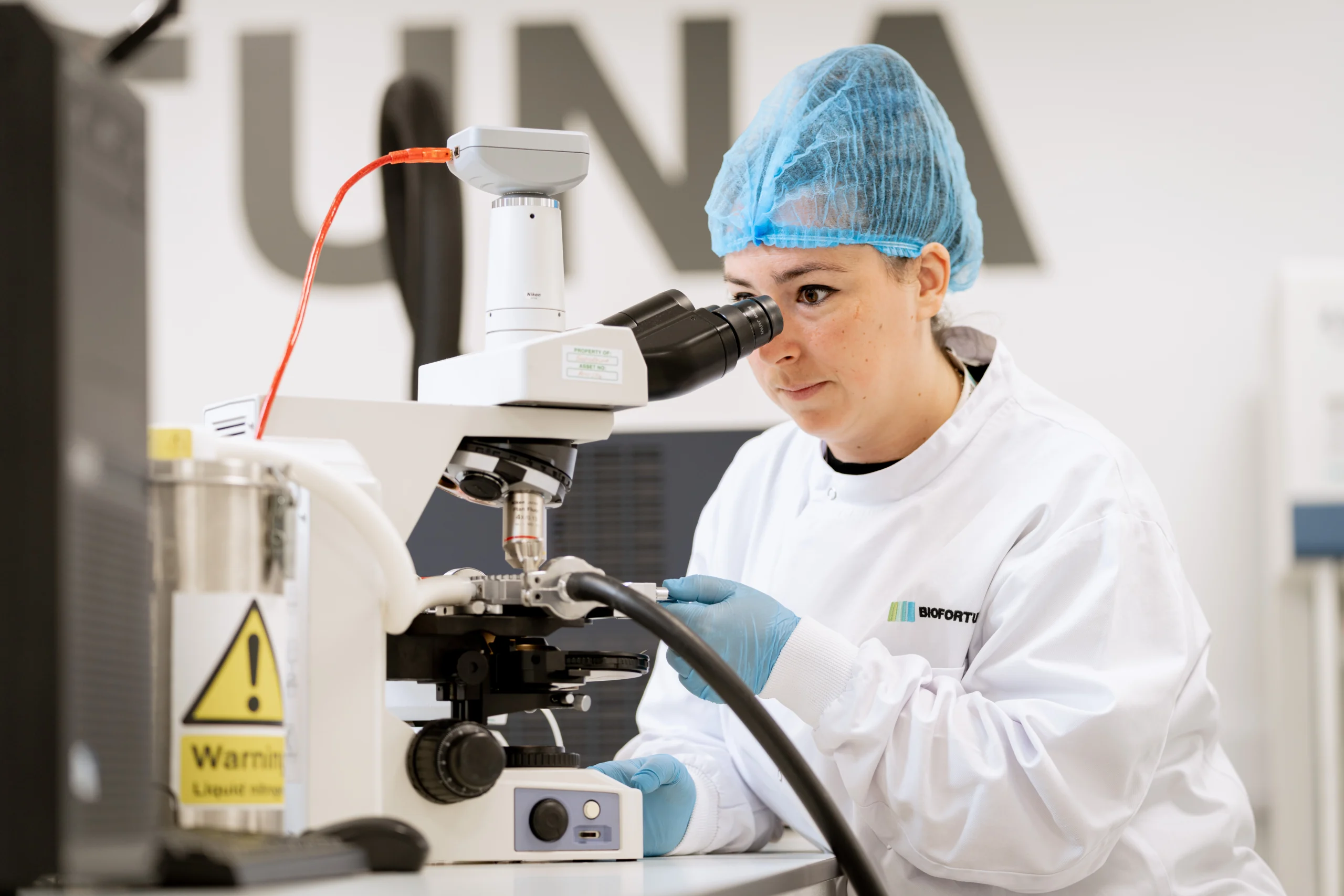
Robust quality control (QC) is essential and must be applied at every stage of the scale-up process from assay development to manufacture:
Incoming Goods QC is a functional test to determine if the assay behaves and performs correctly prior to development and manufacture. From a regulatory perspective, this is a critical piece of due diligence – identifying any failures at this stage avoids the cost and risk of commercialising an assay that doesn’t meet expectations.
After lyophilisation, physical QC should be carried out to determine residual moisture content and the hardness of the lyophilised material, as well as high resolution imaging and reconstitution testing help to determine the robustness of the lyophilised assay.
Finished Goods QC confirms that the final product meets its specifications, including physical appearance and functional performance. Throughout, full traceability must be maintained – from goods in, to goods out – and supported by ISO 13485 compliance. This ensures that every step is documented, reproducible and aligned with regulatory requirements. A commitment to quality and traceability is essential for producing reliable and reproducible assays at scale.
Partnering with Biofortuna
Each of these considerations plays a crucial role in safeguarding performance during assay development and manufacture. Without them, the work invested in development may be compromised at the point of manufacture.
At Biofortuna, we support customers through the transition from development to manufacturing and commercialisation. We have extensive experience lyophilising assays across sectors ranging from food safety to clinical diagnostics. Our customer-lead services are tailored your specific requirements and objectives, and we provide end-to-end support throughout the process:
- accelerating formulation development,
- conducting QC testing to your specifications, and advising on requirements to ensure your assay is of the highest quality and functionality,
- supporting you through the regulatory approval process,
- reducing the overall time and cost of bringing an assay to market.
To explore how our lyophilisation expertise can support you, click here, or get in touch with a member of our expert team today.
Comments are closed.