
Mark Simmons
How lyophilised beads reduce waste
What are lyophilised beads? Lyophilised beads are durable spheres of freeze-dried material formed from accurately measured dispense volumes of customisable formulation. These single-dose beads – like lyophilised cakes – retain long-term stability at ambient temperature and therefore do not need expensive cold chain shipping or refrigeration during storage. This significantly increases the accessibility of diagnostic testing for difficult-to-reach patients, facilitating

Point of Care testing – 5 challenges
The enhancements seen in diagnostic testing over the last 40 years have been nothing short of remarkable. In the UK alone the survival rate of cancer patients has doubled, and much of this is attributed to earlier and targeted treatment, facilitated by accurate, early diagnosis. But for enhancements in diagnostic performance to deliver a step change in global health and
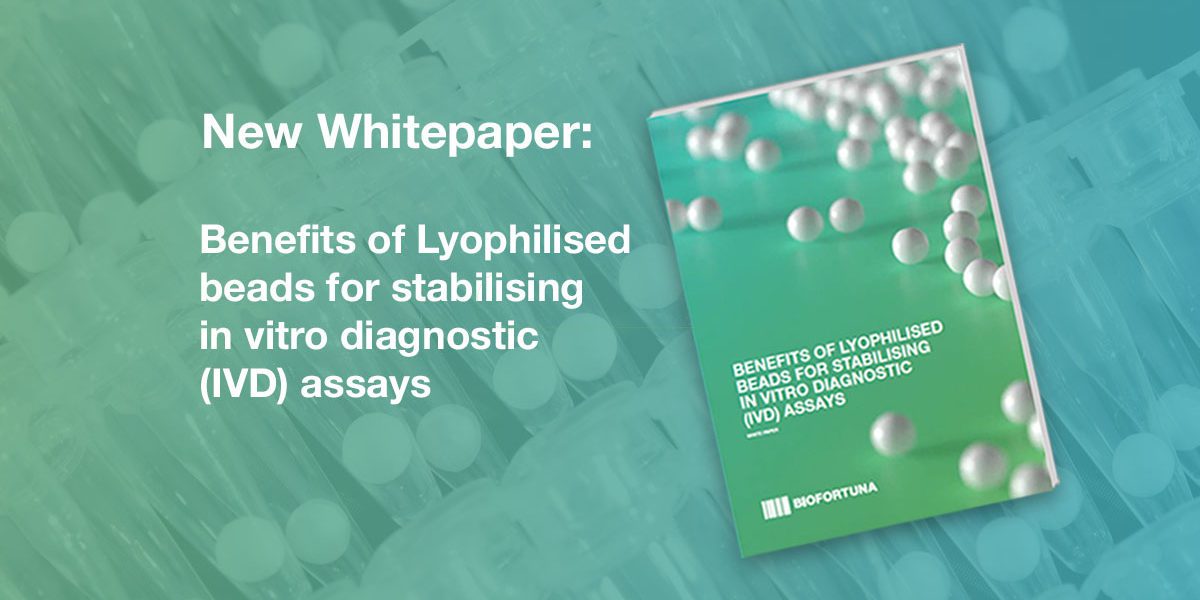
New Whitepaper – Benefits of lyophilised beads
Our latest whitepaper outlines the principle benefits of using lyophilised reagent beads to stabilise in vitro diagnostic assays. The 24 Page document explains how the single dose nature of a bead delivers benefits in dosage consistency, speed of reconstitution and reduced risk of contamination and wastage, as well as a number of manufacturing efficiency benefits. The whitepaper is available to

Can lyophilized beads improve assay accuracy?
What are Lyophilized beads? Lyophilized beads are durable spheres of freeze-dried material formed from accurately measured volumes of customizable formulation. Like all lyophilized formats, these single-dose beads retain long term stability at ambient temperature and consequently do not need expensive cold chain shipping or refrigerated storage. However Lyophilized beads also help to improve assay accuracy as well as delivering a
Lyophilization: eliminating the need for cold chain logistics

Lyophilisation or air drying? Which is better for your assay?
Molecular diagnostic assays – Choosing the right partner
Increasing the efficiency of molecular diagnostic assay manufacturing There are many reasons you might consider partnering with a new molecular diagnostic contract manufacturer. You may need to ramp up production quickly to meet increasing demand, or you could be looking to reduce production costs. Perhaps you want to mitigate the risk of a single source of supply, or perhaps an issue

What is Lyophilisation?
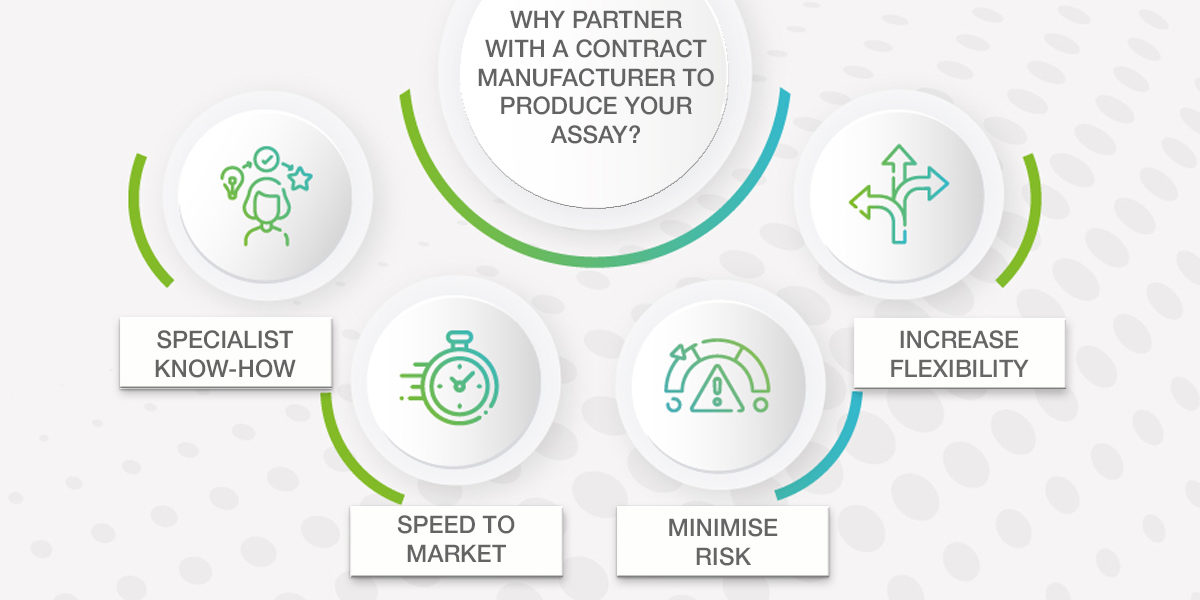
Could outsourcing provide new opportunities for you in 2023?
Managing your manufacturing processes in-house may initially appear to be the most streamlined and snag-free route to market. After all, what could benefit your production cycle more than having everything under one roof, ready for immediate analysis, testing and shipping? In reality, overseeing every aspect of production in-house can place a strain on resources, create bottlenecks and delay commercialisation and

4 tips to mitigate the risk of single source assay manufacturing
How secure is your assay manufacturing? Manufacturing in vitro diagnostic (IVD) assays in-house, or outsourcing to a single contract manufacturer, should result in the seamless integration of technology transfer, pilot batch production, validation and verification, regulatory submission and subsequently efficient large-scale output. After all, if all those processes are managed in one place the surely there is tighter control? But
Latest news and blogs




Footer Menu
Latest news and blogs

Contact us
