Development and manufacture of a Lyo bead PCR Food safety assay
We were approached by a global multi-billion dollar life sciences organisation to transform an existing portfolio of food safety diagnostic assays into a lyo bead format.
Following a thorough selection process and due diligence review of our molecular diagnostic development and manufacturing facilities, we were chosen as the preferred partner. Our key differentiators were our demonstrable track record as an independent CDMO, our scalable manufacturing capacity of up to 2.5 million beads a week and our commitment to transparency. We entered a co-development programme to transition the first of three qPCR assays into a lyophilised format.

The Objectives
The drivers behind the format change were a simplified workflow for the end-user, increased shelf life and improved cost efficiency. The simplified, single-step workflow reduces complexity for the end user with pre-dispensed reagents and less pipetting steps, significantly reducing time to result from approximately twelve hours to less than three. This enables faster and more efficient food safety testing, vital for perishable goods.
Our Approach
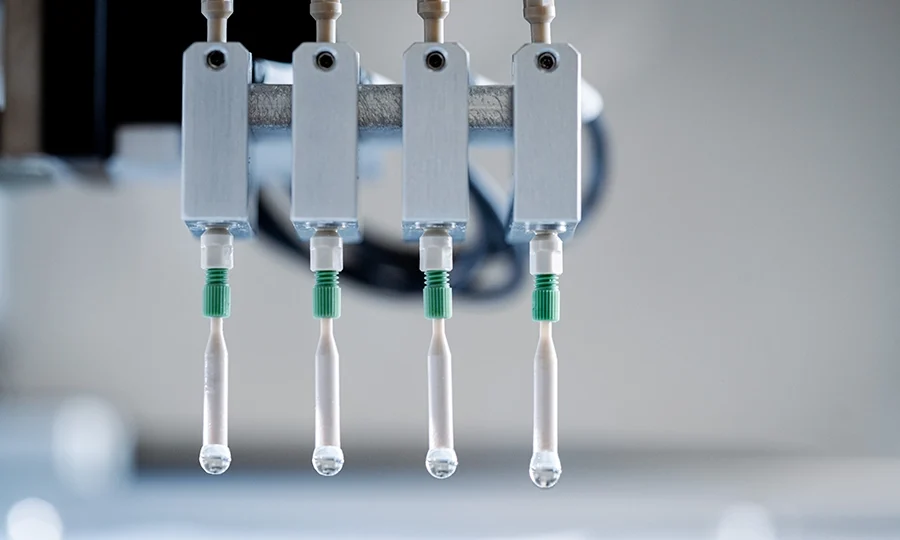
Having started with a functional, commercially available assay, the development phase focussed on producing lyo beads with the physical properties (shape, size and residual water) needed to meet the handling and stability requirements, while maintaining the functional performance expected by end-users.
The single-dose requirement makes the lyophilised bead format the perfect choice. Beyond this core advantage, our customer also benefited from significantly increased batch sizes and higher production throughput. Lyo beads can be manufactured in volumes up to ten times greater than cakes, making them well-suited to meet commercial demand forecasts.
With demand for the existing format in the millions of tests per annum, designing a process that could be scaled quickly was also essential.
Challenges
There were several scalability challenges during the development process, most significantly the wet formulation’s short stability window and the requirement for a custom packaging solution.
Through close collaboration with the customer and our suppliers, we met these challenges by making infrastructure alterations and developing a bespoke manufacturing workflow. This accelerated successful conversion of the wet format assay into a lyo bead format and transfer to contract manufacture.

The Outcome
The lyo bead assay allowed the combination of the oligonucleotides and PCR mix into a single reaction mixture ready for sample addition, simplifying the workflow and time to result for the end user, while delivering the same level of reliability as the wet format.
As market demand for the product increases, we are well-positioned to support our customer in scaling up to meet this growth, with projected demand expected to reach several million lyophilised beads annually. Our capabilities and experienced team ensure that our customer can confidently meet rising demand without disruption as product adoption grows year-on-year.
We are proud to be leveraging this core process across other products within the customer’s portfolio, accelerating the transition of other wet format assays to lyo bead format, extending its geographic reach and commercial value.
To learn more about our custom lyo bead solution, talk to one of our experts today.
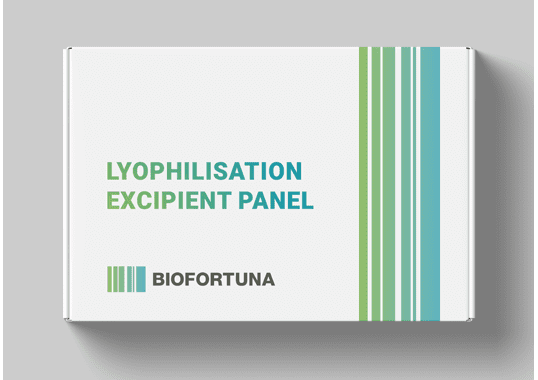
REQUEST YOUR COMPLIMENTARY EXCIPIENT PANEL
Do you have an assay in development? Test the compatibility of a range of excipients with your formulation by requesting one of our complimentary panels today.
THE BEST IDEAS START WITH A CONVERSATION
Complete the form to book an informal meeting with one of our technical experts.